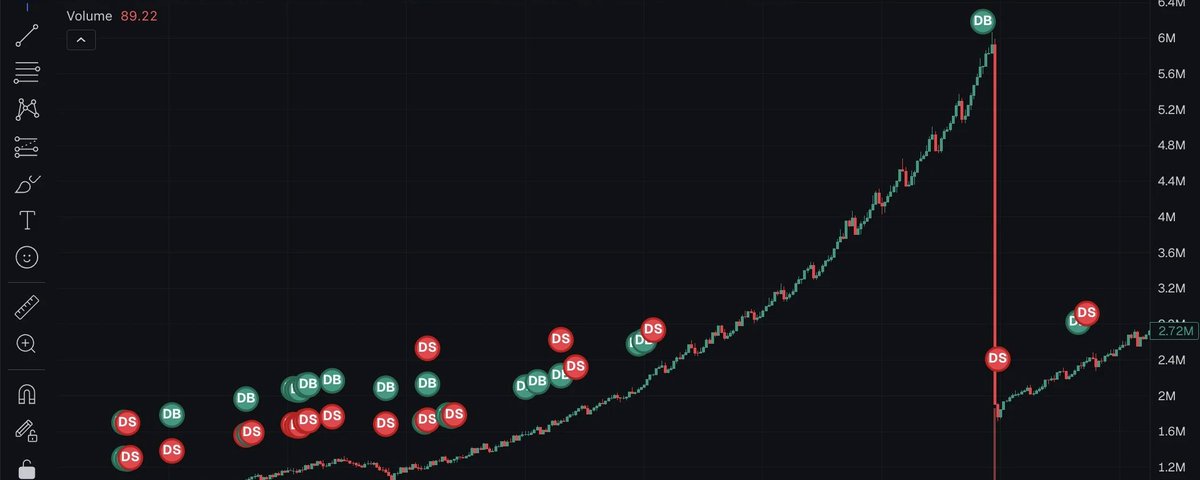
my experience building and running an anti-rug market making bot on pump.fun. working directly with the bonding curve program, watching how operators extract from their own communities, building tooling that does the opposite, and exposing what pump.fun market making actually looks like behind the scenes.
in buenos aires, in 1949, borges wrote about the zahir. a coin so unforgettable that once you held it, it consumed you entirely. until the world dissolved and only the coin remained. i think about that story more than i should. not because i am literary. but because i spent months staring at a bonding curve and i can tell you the effect is not dissimilar.
pump.fun market making has been a quiet but enormous part of the solana meta for a while now. most people trading on pump.fun do not realize that the majority of tokens they interact with are being actively managed by bots. not in a neutral way. not even in a self-interested but honest way. in a purely extractive way. i built a market making engine for pump.fun. i have used it. what i saw in the process, both in the ecosystem and in the tooling other operators use, is worth talking about openly. almost all of the discourse focuses on which tokens are real and which are rugs. almost nobody talks about the infrastructure that makes extraction possible at scale. which is i think the more interesting and more damning question.
1. how pump.fun actually works under the hood
before anything else it helps to understand the mechanics. because without them the rest of this is just opinion.
pump.fun does not use traditional liquidity pools. there is no raydium pool. no order book. no matching engine. every token lives on a bonding curve. a constant-product amm baked directly into a solana program. the formula is elegant in the way that dangerous things often are: virtual token reserves multiplied by your sol input, divided by the virtual sol reserves plus your input. that is it. that is the entire price discovery mechanism for billions of dollars in volume.
fees are handled on-chain by the pump.fun program itself. i want to be clear about this because it matters: the problem has never been the curve. the curve is just mathematics. as indifferent to human intention as gravity. the problem is what people do around it.
2. the extraction playbook
first the operator launches a token using a cluster of wallets that all buy in the same block. usually through jito bundles so nobody can snipe between the create instruction and the initial buys. on the surface this looks like organic early interest. several wallets, different amounts, all entering at once. in reality it is one person controlling every wallet in that first block. the appearance of a crowd where there is only a single actor and his reflections.
then they run what they call a market maker. i use the term loosely. the way one might call a painted backdrop a landscape. it is not making a market. it is manufacturing the illusion of one. volume bots buy and sell between the operator's own wallets to simulate activity. the chart looks healthy. buys are flowing. it looks to the uninitiated observer like people are interested.
the operator begins selling into that organic liquidity. slowly at first. then without restraint.
then they exit. pull everything out across the wallet cluster. chart goes to zero. move on to the next ticker. repeat tomorrow with a different name and an identical mechanism.
the tooling for this is sold in private telegrams for anywhere from 1 to 10 sol. closed source. obfuscated. explicitly designed for maximum extraction. the entire ecosystem is organized around a single question which no one states plainly but which governs every decision: how much can i take before anyone notices?
3. what most market making tooling actually does
i should clarify what i mean when i say volume bot. because the term market maker has been so thoroughly corrupted in this context that it now means its opposite.
most pump.fun market making tools are volume bots. that is all they are. they do not provide real liquidity. they do not stabilize anything. they create the appearance of a market where there is not one. the way a movie set creates the appearance of a city where there is only plywood and paint.
the tooling for this is mature. refined even. people sell it as dev tools or launch kits or bundlers. the marketing is always the same: launch your token, manage liquidity, control the chart. what they mean, translated from euphemism into plain language, is exploiting the liquidity.
i assumed most operators were trying to launch tokens and provide some basic liquidity so the chart did not look dead. maybe take some profit along the way sure but at least maintain a real market. i was guilty of the kind of naivety that consists not in ignorance of facts but in the refusal to accept what the facts obviously imply.
the reality was very different. the overwhelming majority of operators i encountered were running pure extraction. not some. not many. most. the default mindset is: launch, inflate, extract, repeat. the tools reflect it. the telegram groups reflect it. the entire meta reflects it. once you see it you cannot unsee it. which is perhaps the most zahir-like quality of this whole enterprise.
4. what i built instead
i built two things. a launcher and a market maker. both operate on pump.fun's bonding curve. both have been tested and used. the design philosophy is in every meaningful sense the opposite of what i just described.
the launcher creates a token and executes coordinated initial buys across multiple wallets in a single atomic jito bundle. one block. everything lands or nothing does. no snipe window. this component is structurally similar to what extractors use. the difference is purpose. it is not a mechanism for front-running your own community.
the market maker is the part that actually matters. and the part i spent the most time thinking about. it monitors the bonding curve in real time via websocket and reactively trades against external volume.
the key difference. the one that separates this from everything else i have seen in the ecosystem: the bot does nothing unless a real external trade happens first. it does not manufacture volume. it does not trade with itself. if nobody is trading it sits idle.
5. why reactive market making is fundamentally different
an extraction market maker creates fake volume, attracts real buyers with that illusion, sells into them, and exits. a reactive market maker waits for real volume, provides counter-liquidity, stabilizes the chart, and stays.
when you run a reactive market maker you are giving buyers a real market. they can buy and there is genuine sell-side depth. they can sell and there is genuine buy-side support. the chart reflects actual supply and demand instead of a puppet show. when you run a volume bot the depth is fake. the volume is fake. the only real things are the money that retail puts in and the money the operator takes out.
6. what i learned running it
running a real market maker on pump.fun teaches you several things quickly. none of them are comfortable.
first. most of the volume on pump.fun is fake. once you understand what real reactive trading looks like you start recognizing manufactured volume immediately. the patterns become obvious. perfectly timed buys and sells. round numbers. no reaction to external trades. it is everywhere. and i mean everywhere. the way a specific architectural flaw is everywhere once an engineer has pointed it out to you and you can never again look at a building without seeing it.
second. providing real liquidity costs money. every counter-trade has slippage. every position carries added risk. a genuine market maker is not free to operate. the extraction operators do not face this cost because they are not providing real liquidity. they are cycling sol between their own wallets paying only the curve's fee. if you did your homework though you can actually operate it almost risk free.
7. the uncomfortable truth about pump.fun
most pump.fun devs do not want infrastructure. they want a one-day extraction machine. launch pump dump repeat. the tooling reflects this. all of it closed source. sold as alpha. engineered to maximize how much sol you can pull from retail before the chart flatlines.
i am not going to pretend the pump.fun ecosystem is full of legitimate projects. it is mostly gambling. but even in a gambling-heavy environment. perhaps especially in a gambling-heavy environment. there is a difference between running a fair game and running a rigged one. the casino takes a cut. the card sharp takes everything. both sit at the same table but they are not the same thing.
oldest trick in any market.
that realization is part of why i built what i built. not because i think pump.fun is going to become a legitimate token launch platform overnight. but because the option to operate differently should at least exist. the existence of a single honest tool in an ecosystem of dishonest ones changes nothing about the ecosystem and everything about what is possible within it.
8. why i have not open-sourced it yet
i have thought about this more than i would like to admit. the thesis is simple: if the tools are open the playing field is level. right now the people with the best extraction tools win because their tooling is closed and sold at a premium. if everyone had access to legitimate market making infrastructure the meta would have to evolve.
but there is a counter-argument and it is not trivial. open-sourcing legitimate tooling can lower the barrier for bad actors. a reactive market maker is designed to stabilize. but the launcher, the bundler, the wallet infrastructure. those same components can be repurposed.
for now the code stays private. i might open-source it. i might not. but either way the principles behind it are worth sharing. because the conversation around pump.fun tooling is almost entirely focused on extraction. and almost nobody is talking about what it would look like to do it differently. that absence of conversation is itself a kind of statement.
9. where this goes
maybe pump.fun is just an extraction arena and always will be. maybe the incentives are too distorted for anything else to survive. but as long as the bonding curve exists and people are trading on it the choice between providing real liquidity and faking it is a choice every operator makes. whether they frame it as a choice or not.
i hope this gives some useful context to anyone trading on pump.fun or thinking about building around it. the infrastructure layer matters more than most people realize. the first step toward building something that does not extract at all.
tldr: let the guys gamble. do not rob them.